

Regulation Is Not the Same as Being Calm
When people begin learning about the nervous system, one of the most common goals is to feel calmer.
It makes sense. Many of us are tired of feeling tense, overstimulated, anxious, emotionally drained, disconnected, or unable to fully rest. We may begin practicing breathing exercises, meditation, movement, or grounding with the hope that uncomfortable feelings will disappear.
But nervous-system regulation does not mean remaining calm all the time.
Regulation is the ability to move through different levels of energy and emotion while staying connected enough to respond to what is happening.
A regulated nervous system can experience stress, excitement, sadness, frustration, joy, fatigue, and uncertainty. The goal is not to eliminate these experiences. The goal is to develop greater flexibility in how we move through them.
Your Nervous System Is Designed to Change
Your nervous system is not meant to remain in one state throughout the day.
You may need more energy to complete a project, have a difficult conversation, exercise, solve a problem, or respond to an urgent situation. At another time, your body may need quiet, rest, connection, or reduced stimulation.
These natural shifts are part of being human.
Difficulty may arise when the nervous system has trouble adjusting after the situation changes. You may continue feeling activated long after the stressful moment has passed. You may feel depleted after spending too much time managing responsibilities. You may also move between high energy and exhaustion without experiencing a comfortable middle ground.
Rather than judging these shifts, nervous-system education helps us become more aware of them.
Awareness creates an opportunity to respond with greater intention.
What Regulation Can Look Like in Everyday Life
Regulation is often subtle. It does not always look like deep relaxation, perfect focus, or emotional stillness.
It may look like:
• Pausing before responding during a tense conversation
• Recognizing that you need a break before becoming completely overwhelmed
• Asking for clarification instead of assuming the worst
• Allowing yourself to feel disappointed without abandoning the rest of your day
• Moving your body after sitting through a stressful meeting
• Choosing a quieter environment when you feel overstimulated
• Accepting support instead of trying to manage everything alone
• Returning to a task after taking time to reset
• Resting without requiring yourself to earn it first
Regulation is less about controlling yourself and more about developing the capacity to stay in relationship with yourself.
The Difference Between Regulation and Suppression

It is also important to recognize that appearing calm does not always mean someone feels regulated.
A person may speak softly, remain still, or continue completing tasks while feeling overwhelmed internally. They may be holding their breath, tightening their muscles, disconnecting from their emotions, or pushing through exhaustion.
Suppression often asks: “How do I make this feeling stop so I can keep going?”
Regulation asks: “How can I support myself while this feeling is here?”
This does not mean every emotion needs to be deeply analyzed. Sometimes support may be as simple as taking a brief pause, drinking water, changing environments, stretching, asking for space, or reducing one unnecessary demand.
The intention is not to force an immediate emotional change. It is to offer your system something supportive.
Why Some Practices Do Not Work Every Time
You may have noticed that a calming practice helps on one day but feels ineffective or uncomfortable on another.
This does not necessarily mean you are doing it incorrectly.
Different nervous-system states may need different kinds of support.
When you feel restless or highly energized, sitting completely still may feel frustrating. Your body may respond more comfortably to walking, shaking out your hands, stretching, humming, or gently pressing against a wall.
When you feel low, withdrawn, or disconnected, a long relaxation practice may leave you feeling even less energized. You may benefit more from natural light, rhythmic movement, music, a warm drink, or brief contact with someone you trust.
When you feel relatively steady, quiet breathing or meditation may feel supportive and accessible.
The most effective practice is not always the one that sounds the most peaceful. It is the one that responds to what your system may need in that moment.
Build a Menu, Not a Perfect Routine
Many wellness routines are presented as though one practice should work every day. But your energy, environment, responsibilities, physical needs, and emotional capacity can change.
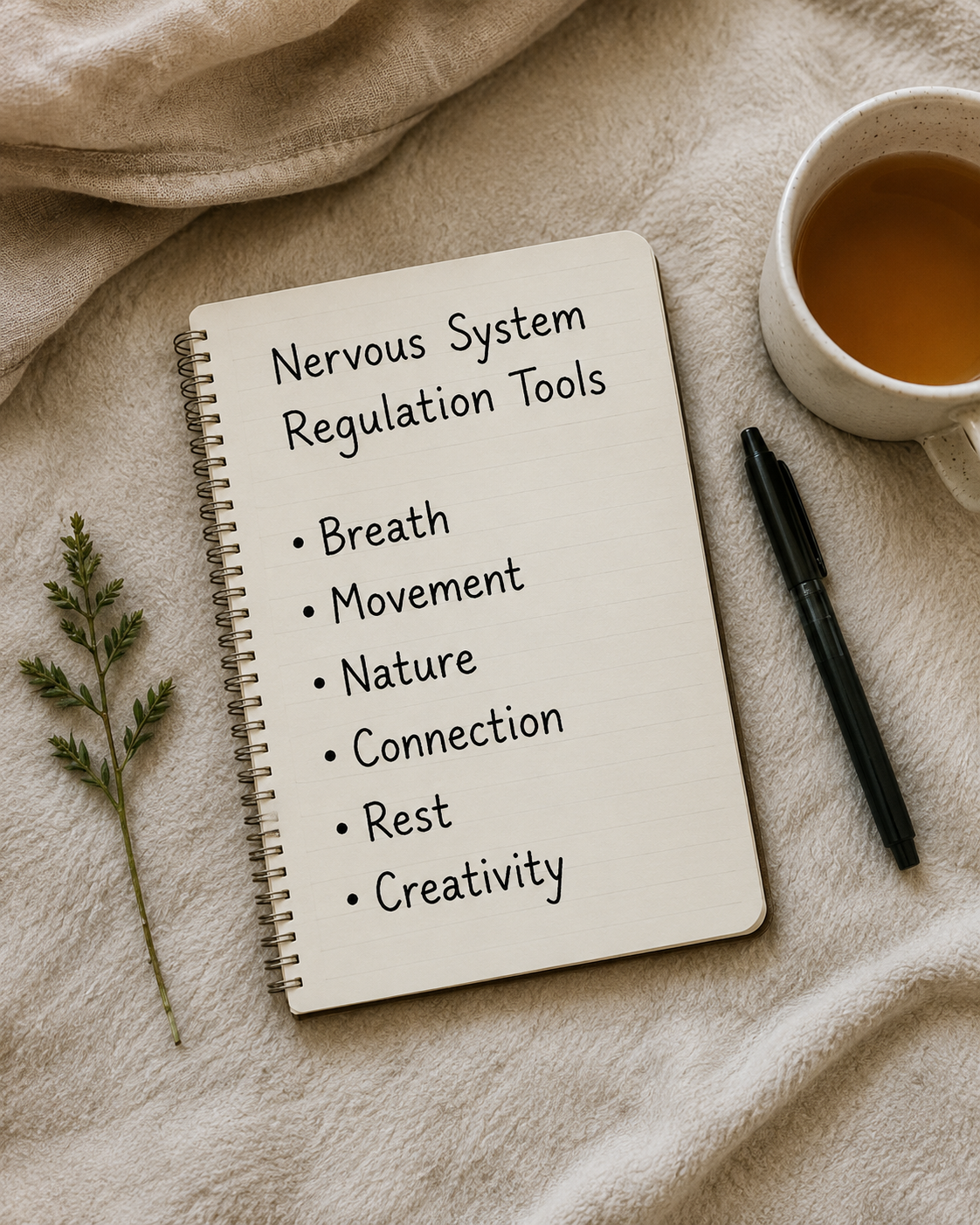
Instead of relying on one perfect routine, consider creating a small regulation menu.
When You Need Movement
• Take a brief walk
• Stretch your arms and shoulders
• Shake out your hands
• Sway gently to music
• Complete one physical household task
When You Need Grounding
• Feel both feet against the floor
• Hold a warm or textured object
• Name what day and time it is
• Notice the temperature of the air
• Press your palms together gently
When You Need Connection
• Text someone you trust
• Sit near a supportive person
• Spend time with a pet
• Listen to a comforting voice or familiar audio
• Ask for help with one specific task
When You Need Less Stimulation
• Lower the lights
• Reduce background noise
• Step away from your phone
• Move to a quieter space
• Give yourself permission not to respond immediately
A regulation menu gives you choices. It allows you to respond to your current capacity rather than forcing yourself through the same practice every time.
A Polyvagal-Inspired Practice: The Supportive Exhale
This gentle practice focuses on allowing the exhale to become slightly longer without forcing a deep breath.
A longer, comfortable exhale may help communicate that the body can soften some of its effort. The practice should feel easy rather than demanding.

How to Practice
Sit or stand in a position that feels supported.
Allow your breathing to remain natural for a few moments.
Without taking a large breath, inhale gently through your nose.
Exhale slowly through your nose or softly through your mouth.
You might imagine that you are:
• Cooling a warm drink
• Fogging a mirror very gently
• Sighing without sound
• Letting air leave a balloon slowly
Repeat for three to five comfortable breaths.
Do not try to empty your lungs completely. Avoid holding your breath or forcing the exhale to last longer than feels natural.
Then return to your usual breathing.
Notice
After the practice, gently observe:
• Did your shoulders change?
• Did your jaw soften?
• Did your breathing become easier?
• Do you feel more settled, energized, uncomfortable, or unchanged?
There is no required outcome.
If extending the exhale causes dizziness, anxiety, breathlessness, or discomfort, stop and return to your natural breathing. You may choose a non-breath-based practice instead.
Begin With Curiosity
Learning about your nervous system is not about monitoring every sensation or turning self-care into another task to complete perfectly.
It is an invitation to understand yourself with greater compassion.
You can begin with a few simple questions:
• What type of support feels most accessible to me today?
• Do I need more energy, less stimulation, movement, rest, or connection?
• What helps me feel more present without forcing me to feel different?
• What is one demand I can reduce or approach more gently?
The more you notice your patterns, the more choices you may begin to recognize.
You do not need to remain calm all the time to be regulated. You are learning how to respond, recover, reconnect, and support yourself through the natural changes of everyday life.
Rae of Sunshine Holistic Healing Co., LLC
This article is intended for general education and personal reflection. It is not medical or mental-health treatment and should not be used as a substitute for individualized care.